
DEGOOGLED PHONES — AUSTRALIA

The phone
in your pocket
has a second job.

And nobody's paying you for the work it's doing.

In September 2022, Optus lost the personal details of nearly 10 million Australians in a single breach. Most of us got the SMS. Some of us got the letter. All of us learned a hard lesson about how much of our lives sit on someone else’s server.

But that was only  the breach you heard about.

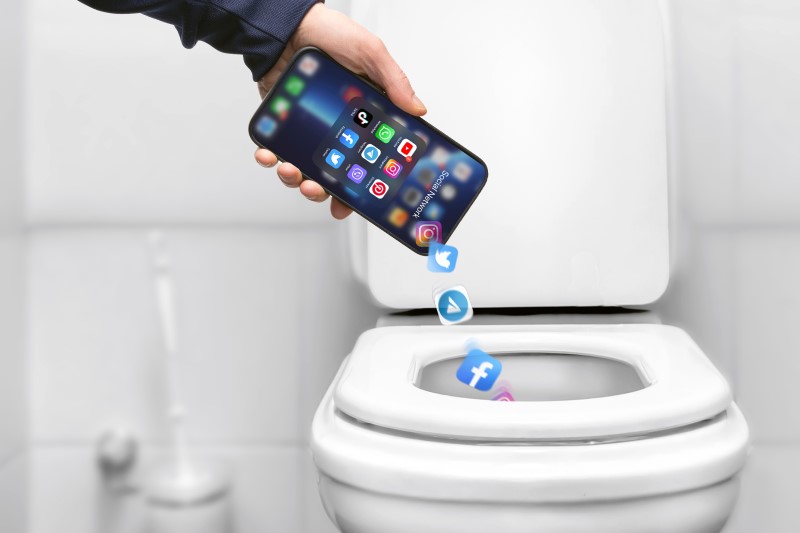
The breach nobody sends you a letter about is the one happening on your phone every minute of every day. There is no breach notification for that one….. It’s just how the phone is designed to work.

Every app you open. Every place you go. Every search you make.

Your information is quietly logged, packaged, and sold — to advertisers, to data brokers, and to anyone willing to pay for it.

Non degoogled Phones spy on you.
PRIVATE PHONES — BUILT IN AUSTRALIA

deGoogled phones with GrapheneOS

Our deGoogled phones are built differently. We replace the operating system — the software that runs everything — with GrapheneOS, the most trusted private operating system in the world. Edward Snowden uses it. Privacy researchers use it. Journalists working in places where being tracked can get you killed use it. And we set it up for you, by hand, here in Australia, so it arrives ready to use the moment you open the box.

Every phone in our recommended range receives GrapheneOS-approved security updates until at least October 2030. We don’t sell phones we can’t keep secure for you — and the ones we do sell, we sell honestly.

All the calls, texts, navigation, browsing, and email you rely on — running on apps that don’t report back. Everything you need a phone to do. None of the surveillance underneath.

Australian family-owned Security updates to 2030+ Secure PDF setup guide included
Why it matters

Why deGoogled phones matter

A modern smartphone reports back to its maker hundreds of times a day. Where you are. What you searched. What you opened. Who you called. None of it is hidden in the fine print — it’s the product.
You’re not the customer. You’re the inventory.
If you’re on an iPhone, the same thing happens but with a different logo on it. Apple’s flavour of surveillance is quieter and better marketed, but the data still leaves your device — to Apple, to their advertising partners, and to anyone with a court order.

Not all hardware is equal — some chips report back to manufacturers you’d rather not trust. And the software sitting on top of it was built by a surveillance company whose entire business model depends on knowing everything about you.

iPhone
Identity known
Apple ID required
Apple Services tracking
Siri — always listening
iCloud backup — data leaves device
App Store — purchases tracked
→ Reports to Apple
Stock Android
Identity known
Google Account required
Google Services tracking
Hey Google — always listening
Google Drive — data leaves device
Play Store — purchases tracked
→ Reports to Google
deGoogled Phone
✓ Anonymous
No account required
No tracking layer
No voice assistant
No reporting
From order to your hand

How we build your deGoogled phone.

Every phone we ship is built individually, to order, by us. Not by a robot. Not pre-flashed in a factory overseas. By a person, on a workbench, in Australia.

Step one
We source the right hardware — brand new, from proper supply.

Sealed. Untouched. Never associated with anyone else’s identity, accounts, or history. We don’t sell refurbished phones in our public range — there are real privacy reasons we’ve made that decision.

Step two
We unlock the phone, wipe it clean, and install GrapheneOS.

Every trace of the original Android OS is wiped — no leftover Google services, no hidden accounts. Then GrapheneOS goes in and the install is verified end-to-end.

Step three
We relock the bootloader at the hardware level.

The step that separates a real privacy phone from a marketing exercise. The bootloader is re-locked at the hardware level — the OS can’t be tampered with after it leaves us.

Step four
We pre-install your private app set and dispatch

Brave. Signal. ProtonMail. Forkgram. VPN ready to activate. All pre-configured. Express-posted to your door. Secure PDF setup guide emailed the day it ships.

Every one of our deGoogled phones gets the same four steps.

whether you’re starting with the entry-level Pixel 6a at $780 or the top-of-range Pixel 10 Pro Fold. The price changes. The standard doesn’t.

CHOOSE YOUR PHONE

Choose your deGoogled phone

Pixel 8a deGoogled phone
GrapheneOS security to May 2031
Pixel 8a
From $995
Pixel 10a deGoogled phone
Most Popular Security to Mar 2033
Pixel 10a
From $1,149
Pixel 8 Pro deGoogled phone
GrapheneOS security to Oct 2030
Pixel 8 Pro
From $1,225
Pixel 9 Pro deGoogled phone
GrapheneOS security to Sep 2031
Pixel 9 Pro
From $1,849
Pixel 10 Pro deGoogled phone
Most Popular Security to Aug 2032
Pixel 10 Pro
From $1,995
Pixel 10 Pro XL deGoogled phone
GrapheneOS security to Aug 2032
Pixel 10 Pro XL
From $2,275
One device for phone, tablet, and computer

It's a phone. Unfold it — it's a tablet. Add the keyboard combo — it's a computer.

The Pixel 10 Pro Fold is the only phone in our range that does the work of three devices. Unfolded, you have a 6.4-inch tablet for reading, video, and serious work. Folded, it slips into your pocket like a normal phone. Pair it with a foldable keyboard, mouse and stand combo and you have a portable computer wherever you set it down. One private operating system. One point of support. One purchase that retires three.

Pixel 10 Pro Fold
GrapheneOS to Aug 2032 Phone · Tablet · Computer
Pixel 10 Pro Fold
From $2,997 incl. GST
Order Pixel 10 Pro Fold
Storage variants: 256GB / 512GB / 1TB

“Just so you know — this is the phone I carry. Every day.

The Pixel 10 Pro Fold has been my daily driver since the day I started building them for clients. I don’t put my name on phones I wouldn’t use myself, and this one has been in my pocket the whole time I’ve been writing this page. — Tony”

Entry-level option — for privacy on a budget

The Pixel 6a is our single entry-level option. Honest price, honest disclosure on the shorter support window.

Pixel 6a deGoogled phone
Security to Jul 2027 Entry-level
Pixel 6a
From $780

The Pixel 6a is currently supported with security updates until July 2027 — about 14 months from today. After that, the phone keeps working, the privacy apps keep updating, and removing Google services means you’re still dramatically more private than any stock Android phone with all its updates intact. An honest entry point.

Looking for refurbished, tablet, or older Pixel? Contact us directly →

Choosing your phone

Which deGoogled phone is right for you?

There is no wrong answer here. Every phone in our recommended range runs the same private operating system, gets the same care on the bench, and arrives ready to use. The differences are about what you’ll actually do with the phone.

Privacy on a budget
You want out of the surveillance ecosystem and the price has to work for you.
Start with the Pixel 6a at $780. Supported until July 2027. Honest entry point, honest disclosure.
See the Pixel 6a ↑
Best bang for buck
You want the best balance of price, support runway, and current-generation hardware.
The Pixel 10a at $1,149. Released 2026, supported until March 2033. If you don't have a specific reason to spend more, this is the one.
See the Pixel 10a ↑
Pro features, mid-generation
You want a Pro-tier phone with more support runway than the 8 Pro, without jumping to the 10 Pro.
The Pixel 9 Pro at $1,849. Supported until September 2031. Saves $146 over the Pixel 10 Pro for very similar daily-use experience.
See the Pixel 9 Pro ↑
Premium current-generation default
You want the latest generation, the longest runway, and the best Pro-tier hardware.
The Pixel 10 Pro at $1,995. Over six years of runway. If you replace your phone every 5–6 years and want to do it once, this is the answer.
See the Pixel 10 Pro ↑
Photo enthusiast or bigger screen
You take photography seriously, or you simply want the largest non-folding screen we offer.
The Pixel 10 Pro XL at $2,275. Larger sensor, larger display, longest battery life in the standard range.
See the Pixel 10 Pro XL ↑
One device replaces three
You want one device that does the job of a phone, a tablet, and a computer.
The Pixel 10 Pro Fold at $2,997. Phone in your pocket, tablet on your desk, portable computer with the keyboard combo. Tony carries this one every day.
See the Pixel 10 Pro Fold ↑

We charge for our labour. No markup fee.

Every phone on this page is priced the same way: the cost of the phone itself, plus our labour to set it up properly. We don’t apply a percentage markup. We don’t price the premium models higher because they’re premium. The labour to deGoogle a Pixel 6a is the same as the labour to deGoogle a Pixel 10 Pro Fold — and we charge accordingly.

The model you choose is the model that suits you. Not the one that suits a margin.

Choosing your phone

Common questions before you buy.

Yes — just not through the public range. Email us with the model, the storage size, and a rough budget. We'll let you know what's currently sourceable, what we'd recommend, and what the build would cost. We don't push refurbished or older models, but we don't refuse to build them either.

Quick answer: most people have been looking at the Pixel 10a. Best balance of current-generation hardware, long support runway, and price. If you want more screen, more camera, or more performance, look at the Pro tier. If budget is the deciding factor, the Pixel 6a is your entry-level option.

Support runway: the Pixel 6a runs until July 2027 — about 14 months from today. Every phone in our recommended range runs until at least October 2030. Price: the Pixel 6a is the most accessible entry into the deGoogled ecosystem.

Everything else is the same. Same OS. Same care on the bench. Same private apps pre-installed. Same secure PDF setup guide. Same labour-only pricing.

Easy — for the things you already do on a phone. Calls, texts, web browsing, photos, banking, messaging, maps, video calls, music — all of it works the way you expect. The learning curve is small and short. The setup guide we email you walks through everything in plain English. Our oldest customer is in his 80s. He hasn't called us with a problem since the day his phone arrived.

It will stop most of the tracking that affects most people most of the time. It will not make you invisible. Anyone who tells you otherwise is selling you something.

Removed entirely: Google services tracking, app-level advertising IDs, location pings to Google, the whole background-reporting layer. Significantly reduced: app-level tracking, browser tracking, data leakage from having a Google or Apple account on your phone. Not removed: mobile carrier records, your IMEI. A VPN helps significantly with the network layer.

Most Australian banks work fine — and our standard recommendation is to use your bank's website in the browser, not the bank's app. Bank apps, in their fine print, often request permission to read shared storage, read your calendar, read your contacts, and access location. Brave handles bank websites well.

If your bank specifically requires its app, you can install it via Sandboxed Google Play and use it inside its sandbox. The app will work — it just won't have the device-wide access it would have on a stock Android phone.

F-Droid — the open-source app store. Privacy-respecting apps, no tracking, no Google account required. Most of your apps will come from here. Aurora Store — gives you access to the Google Play catalogue without a Google account. Sandboxed Google Play (optional) — for apps that won't work without Play Services. Your bank app, ride-share, some delivery apps. The phone arrives with F-Droid and Aurora Store ready to use.

Your phone number is one of your most persistent identifiers — tied to your real identity through carrier records. Your current SIM has also been associated with your old phone's IMEI (the unique hardware serial number every phone carries), meaning your device history follows the number.
Yes — get a new SIM and port your existing number across. You break the IMEI association, land on a private device, and keep the number your contacts know. For sensitive communications, add a second SIM or eSIM with a fresh number. Most phones in our range support two SIMs at once.

Yes. You can port your current number to the new phone exactly the way you would with any phone change. Most Australian carriers handle the port within a day or two. If your existing SIM physically fits the new phone, you can simply move it across without porting at all.

Any Australian carrier. The phones are unlocked — not tied to Telstra, Optus, Vodafone, or any specific provider. The smaller resellers (Boost, ALDI Mobile, Belong, amaysim, Felix Mobile, Catch Connect, etc.) all ride on the three big networks anyway. Pick whoever has the coverage you need at the price you want.

Yes. Every phone in our current range supports two SIMs at once — typically one physical nano-SIM and one eSIM. Two SIMs is genuinely useful for work/personal separation, travel, or privacy compartmentalisation.

Yes. Settings → Network & Internet → Mobile Network → Preferred network type → choose 4G/LTE. If radiofrequency exposure is a concern, our anti-radiation air tube headphones are also worth a look — they remove the wired-headphone path that brings RF exposure to your head.

The operating system, and the hardware

Why Pixel. Why GrapheneOS.

Google didn’t used to make phones. They made an operating system — Android — and let other companies do the hardware. Even the early “Google phones” weren’t really Google’s: the Nexus range was built by HTC, LG, Huawei, and Samsung. Google’s job was the software.

And in those early years, the software was deliberately open. Developers could unlock it, modify it, build on it. A whole modding community grew up around that openness — and quietly built better privacy controls, better sandboxing, better permission systems than Google had ever shipped. Then Google did what Google does. Took the best ideas back. Folded them into stock Android. Rebranded them as their own innovations. And kept selling the same surveillance phones to everyone else.

Pixel is Google’s first real attempt at building hardware themselves — and it’s the only Android hardware left that still lets us do what the modding community always did: unlock the bootloader, install a private operating system, and lock the bootloader back up again. We don’t build on any other hardware because no other hardware can do this.

GrapheneOS is the private operating system we install in place of Google’s stock Android. It’s open-source. It’s audited by an independent global community. It’s used by Edward Snowden. It’s recommended by Michael Bazzell, the privacy researcher whose book Extreme Privacy is the field manual for journalists, lawyers, and anyone whose work demands operational security. And it runs only — by deliberate design — on Pixel hardware.

why GrapheneOS

The OS Snowden and Bazzell trust

Why Pixel hardware

The only Android phone that lets us close the door behind us

Bootloader Lock · The Key Difference

Other Android
Bootloader unlocked ✓
Cannot re-lock ✗
Permanently vulnerable
Pixel Only
Bootloader unlocked ✓
Re-locked with GrapheneOS ✓
Hardware-verified. Tamper-evident.

We use Google’s best engineering against them — exactly the way Google originally said we could.
…So can you.

After it arrives

Maintaining your privacy with a deGoogled phone.

Two real reasons. First, the IMEI — the unique number burned into every phone's hardware — is permanent. We can wipe the storage, replace the operating system, and lock the bootloader, but we can't replace the IMEI. So if a refurbished phone was previously owned by someone whose history you'd rather not inherit, that history potentially follows the device.

Second, condition. We can verify a brand-new phone end-to-end. We can't verify with the same confidence that a refurbished battery has all its original life or that other components haven't been opened. If a refurbished phone is genuinely what you need, contact us directly.

The security update window. The Pixel 7 series receives security updates until October 2027 — roughly 17 months from now. We don't want to sell someone a phone in May 2026 that loses its security patches before they've finished paying it off. The Pixel 8 series and newer all have at least 4½ years of runway ahead — that's the standard we hold for our public range.

If you specifically want a Pixel 7 model and you understand the support window, contact us. We can source one.

Two reasons. Sourcing has narrowed — Google now only sells the 256GB version, and we don't want to source from third-party resellers because we can't verify the device's history. Second, the Pixel Tablet's security update window runs only until June 2028 — about 25 months — which is shorter than the rest of our recommended range.

If you want a deGoogled tablet, the Pixel 10 Pro Fold is genuinely a tablet when you unfold it. If you still want the dedicated Pixel Tablet, contact us.

Each phone in our range receives GrapheneOS-approved security updates until a specific end-date, shown on every product card:

  • Pixel 10 Pro / 10 Pro XL / 10 Pro Fold: August 2032 (over 6 years)
  • Pixel 10a: March 2033 (almost 7 years)
  • Pixel 9 Pro: September 2031 (5½ years)
  • Pixel 8a: May 2031 (5 years)
  • Pixel 8 Pro: October 2030 (4½ years)
  • Pixel 6a (entry-level): July 2027 (about 14 months)

Three things — none of them is "the phone stops working." First, GrapheneOS continues to provide security work independent of Google. Second, the privacy apps keep updating — Brave, Signal, ProtonMail are independent of the OS update cycle. Third, a deGoogled phone with no further updates is still dramatically more private than a stock Android phone with all its updates intact. Removing Google services eliminates around 80% of the surveillance attack surface that affects normal users.

Honest answer — not really. The IMEI is hardware-burned into the phone. What you can do is reduce how much it reveals about you: no cloud account, different SIMs for different uses, a VPN, a Faraday bag when not in use. Combined, these practices significantly reduce the IMEI's usefulness as a tracking tool.

Sandboxing runs each app inside its own walled garden — it can't see other apps, can't read your contacts or photos, can't access the network unless you specifically allow it. GrapheneOS does this far more aggressively than stock Android, and by default.

If you want to go further, GrapheneOS lets you create separate user profiles — one for personal, one for work, one for finance. Apps in one profile genuinely cannot see anything in another. The setup guide walks through both.

Some apps require Google Play Services to work. GrapheneOS lets you install Sandboxed Google Play — the same Play app, but running locked-up inside the sandbox so it can't reach your contacts, photos, other apps, or location unless you specifically allow it.

Installation is simple — available through the GrapheneOS apps repository already on your phone when it arrives. The setup guide walks through it step-by-step.

No. Activate the new SIM on your new phone — never on the old one. When you activate a SIM on a phone, the carrier permanently associates the SIM with that phone's IMEI. Activate the new SIM on the new phone. First connection. No exceptions. Small operational detail. Big privacy difference. 

Your carrier sends you a QR code. On your new phone: Settings → Network & Internet → SIMs → Add SIM → scan the QR code. Total time: usually under five minutes. If the install doesn't work first time, email us with what you're seeing on screen and we'll get you sorted.

Yes. The phones are unlocked international devices. Use your Australian SIM with roaming, buy a local SIM in the country you're visiting, or use an international eSIM service like Airalo or Holafly downloaded before you leave. All the privacy apps work everywhere. A VPN is more important overseas, not less — public Wi-Fi at airports, hotels, and cafés is one of the easiest places to get your traffic intercepted.

Honest answer — no. Not in any meaningful sense. Apple's operating system can't be replaced. The bootloader can't be unlocked the way Pixel's can. There's no equivalent of GrapheneOS for iOS, and there won't be — Apple's hardware deliberately doesn't allow it. The honest truth is that the only meaningful path out of Apple's surveillance ecosystem is the same as the path out of Google's — a different phone with a different operating system.

Technically you can wipe Android off some other phones and install a different operating system. In practice, we don't recommend it — and we don't build them. Pixel is the only Android hardware that lets us re-lock the bootloader after installing a new operating system. Samsung, OnePlus, Xiaomi, Motorola — none of them allow this. And GrapheneOS only runs on Pixel hardware. It's a deliberate design choice.

Yes. We email you a secure PDF setup guide the day your phone ships. It's a comprehensive, plain-English walkthrough covering the first hour, first day, and first week with your new phone — including common questions and troubleshooting. The guide is yours to keep.

Email us. Tell us what you were trying to do, what you clicked or tapped, and what you're seeing on screen. We respond to every email — usually within a business day, often faster. We're not a faceless support desk. You'll be talking to the same person who built your phone.

Yes. We've shipped phones to New Zealand, the United Kingdom, the United States, several countries in Southeast Asia, and across Europe. International shipping is by tracked express courier with full insurance. We quote shipping at checkout based on your destination. International orders typically take 5–10 business days.

There's no subscription, no ongoing fee, no account. You buy the phone, you own the phone. You can keep using your phone for years — even after Google's official support window ends. You're not on your own after delivery — our setup guide answers most questions, and if it doesn't, you can email us. Pick the phone that suits you. We charge for our labour, not for margin.

For the deeper Read

Want to research before you decide?

We’ve written the long-form guide to deGoogled phones in Australia. If you want to go deeper before buying, start there.

The surveillance economy The regulatory landscape Operating systems compared The migration process
From real customers

Real customers. Real relief.

The same theme comes up in nearly every email we get from a new customer: relief. Relief that the phone still does everything it should. Relief that the constant background reporting has stopped. Relief that they didn’t have to become a tech expert to get out. Three of the recent ones we’ve received — verbatim, as written.

"Just to let you know that the phone arrived safely and to thank you for the upgrade. Appreciated. Happy with the product and service and would be pleased to recommend you to anyone seeking the same. All the best.
— John
"Thought I would let you know that the phone arrived today, and I am very happy with it. The faraday wallet too. Your installation and preliminary work setting up the phone is most appreciated. Especially the Proton mail and VPN apps. Fdroid and Aurora too. This phone has everything I need and works splendidly. Great work! Most appreciated! I'll definitely suggest people have a look at your website when they next buy a phone.
— Albert
"The laptop is AWESOME. I'm so pleased. Love your business cards too. I'll definitely be sharing them around and I'll be back to buy a phone from you next year. Keep up the freedom fighting! We need people like you.
— Denise
Ready to start?

Ready for a phone that works for you, not against you?

You’ve read the long version. The short version is this: a deGoogled phone is the most meaningful thing you can do this week to get out of the surveillance economy. We build them by hand in Australia, ship them ready to use, and stand behind every one we sell. Whichever phone you choose, the standard is the same.